Do-it-Yourself Electrical Wiring Articles | Electrical Wiring Diagrams | Electrical Questions and Answers | Electrical Questions Blog

3 Way Dimmer Switch Wiring Diagram

<< Three Way Switch Wiring How to Wire a 4 Way Switch >>
wiring-a-dimmer-switch Summary: Fully explained 3 way dimmer switch wiring diagram will take the mystery out of wiring a 3-way dimmer switch.

3-Way Dimmer Wiring Diagrams for Lighting Control and Energy Savings


3-Way Dimmers
A 3-way dimmer switch is very similar to a regular 3-way toggle switch except for the electronic unit which performs the actual dimming function.


Most 3-way Dimmers
Most 3-Way dimmers come with pre-wired leads that are color coded and explained below. These dimmers are also known as wall dimmers and light dimmers.


Electrical Safety

As with all electrical projects
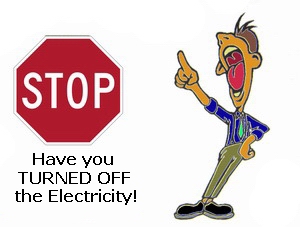
Always positively identify the circuit and turn off the power before performing wiring of any kind.

Never work on an energized circuit!


  TIP:
If you are replacing an existing 3-way switch
:
When replacing an existing 3-way switch take note of how the existing switch is wired BEFORE you remove the wiring, then refer to your notes to help you wire the new 3-way dimmer switch.

Many manufacturers are now producing
dimmer switches that can be used for either Single Pole or 3-Way Switches. For the Single Pole application the instruction sheet will have you cap off one of the wires which will not be used.


Save BIG! Today Only at LampsPlus.com.  PLEASE NOTE:
Care should be taken in selecting your dimmer switch.
Most dimmers are rated for 600 watts of power consumption, so if you have several light fixtures which will be controlled by the 3-way dimmer switch you will need to count the number of fixtures, the number of lamps per fixture and the watts per lamp. Calculate the total watts which will be controlled by your 3-way dimmer switch. A good rule of thumb with any electrical load calculation is to never exceed 80% of the rated load for any electrical component or device.

  NOTE:
Never wire a regular dimmer to an older fluorescent light fixture that is not rated for dimming or a fixture which has CFL - Compact Fluorescent Lamp adapters.

Dimming non-compatible fixtures or lamps will cause the fluorescent lamps to over heat and burn out prematurely.

Newer specially designed fluorescent fixtures and dimmers are available which are are compatible and work well together.
Residential dimmer switches are available for several load requirements including 600, 800 and 1000 watts. If you do not size your dimmer properly the dimmer could overheat and cause internal damage.

Regular 3-way dimmer switches are designed for incandescent lamps unless otherwise stated.

Dimming Low Voltage Lighting fixtures:

Consult the instruction sheet that accompanies the low voltage lighting fixture for the correct dimmer to use. Some fixtures allow you to use regular dimmers, however some do not.

Wiring a typical 3-Way Dimmer Switch:

3-Way Dimmer Switches typically come with the following pre-wired leads:
Green wire - attach to the bonded ground wire(s) in the switch box.
Two Red wires - these attach to the "travelers" - the pair of wires attached to the two screws at one end of the regular 3-way-switch.
One Black wire -attach to the wire commonly found on the screw by itself on the regular 3-way switch, typically the Power or the Switch Leg leaving to the fixture(s).
GB Electrical Wiring Simplified Electrical Reference Book
Technical Details
  • Great for DIYers and Professionals
  • Based on National Electric Code
  • Easy to understand manual
  • General how-to instruction

Product Description:

  • Electrical Wiring Simplified Handbook, 41st Edition
  • Electrical Wiring Practices Manual
  • Easy To Understand
  • New & Improved Illustrations
  • Based On National Electric Code
  • Covers The Basics of Codes & Safety Practices
  • Wire & Cable Types
  • Branch Circuits & Grounding
  • Installation Of Service Equipment
  • Wiring, Troubleshooting, & Repairs

electrical book - wiring simplified


GB Electrical Wiring Simplified Electrical Reference Book #ERB-WS
amazon

Dimmer Switches will help you Save Energy
Installing Dimmer Switches can help reduce your electrical consumption as shown in the chart below.

Dimming lights this much Reduces your energy bill

And extends bulb life

10%
25%
50%
75%
10%
20%
40%
60%
2 times longer
4 times longer
20 times longer
More than 20 times longer
Below you will see some photos that I have selected to help you with your project.
Take a look at a typical 3-Way Dimmer Switch installation
[Click on the images to Enlarge]

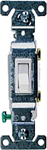
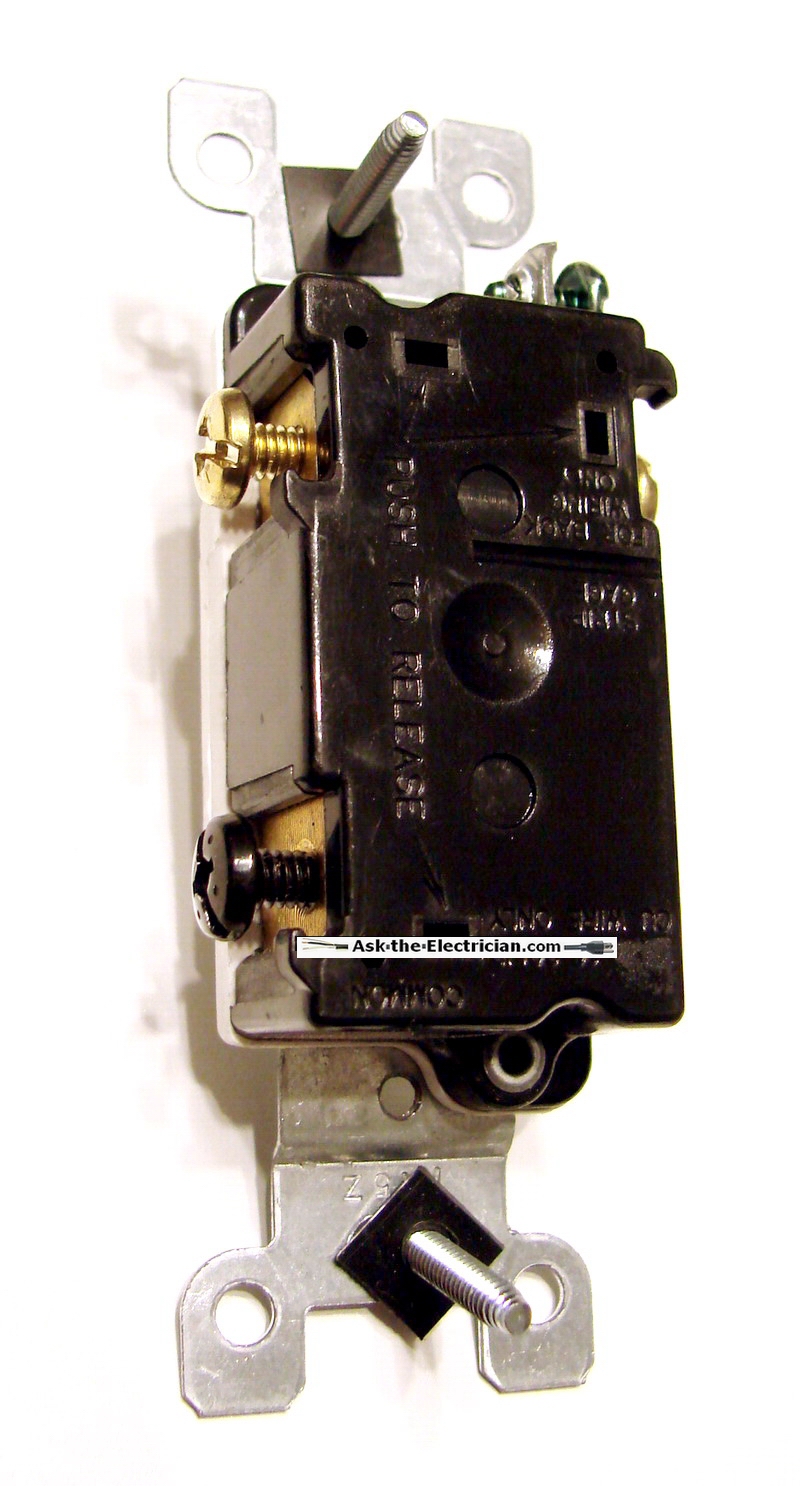
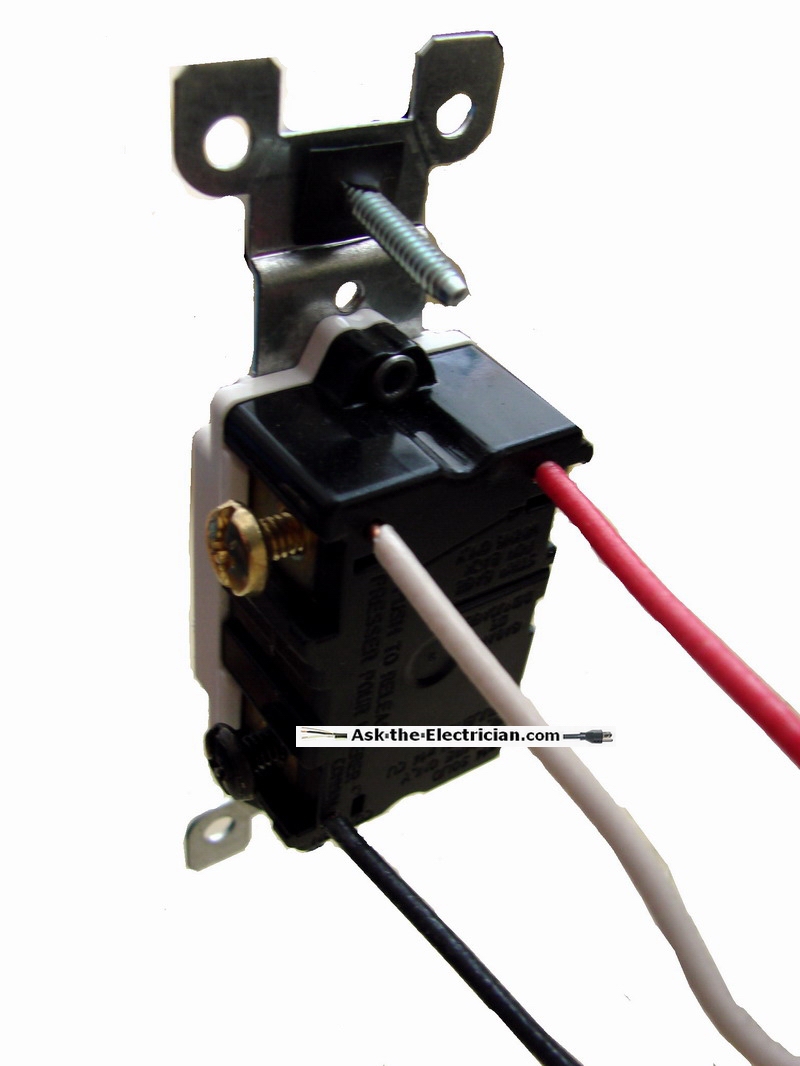
The typical 3-Way switch wiring has two screw terminals at one end of the switch. This is where the "travelers" are connected.

The opposite end of the switch has one screw terminal which may be a different color as seen here in this photo. Depending on your wiring configuration, this single terminal will have attached either the Power Line or the Switched Leg that leads to the fixture.

This wired 3-Way dimmer switch has the Red and White "travelers" attached to the set of screw terminals at one end of the switch.

The screw at the other end of the switch has either the Power or Switch Leg wire attached to it.


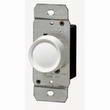
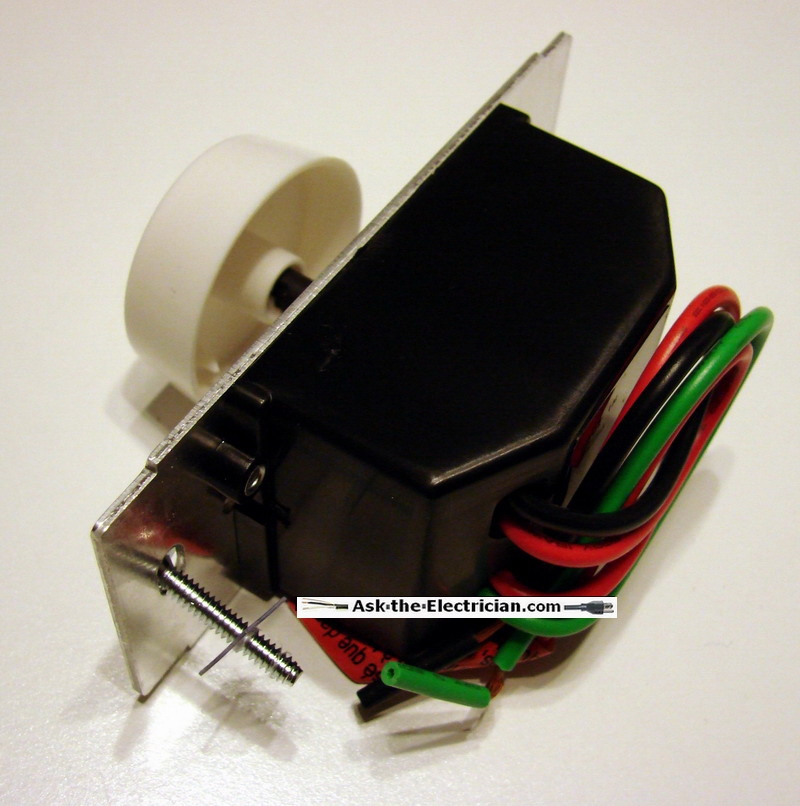
Here a 600 watt Knob Style 3-way dimmer switch has pre-wired leads: Green, two Red and a Black Lead ready for installation.

This 3-Way Dimmer Switch is wired as follows:
The Green Ground Lead attaches to the switch box ground wire, the Red and White "travelers" are attached to the pair of Red Leads and the Black Lead is connected to the Power or Switch Leg connected at the fixture(s).

<<- Three Way Switch Wiring How to Wire a 4 Way Switch->>
-
How to Wire a 3-Way Dimmer Switch Top of Page -
electrical-books

ask-an-electrician

installing-a-ceiling-fan
NEC® and National Electrical Code® are registered trade marks of the National Fire Protection Association (NFPA).
CE® and Canadian Electrical Code® CSA C22.1 are registered trade marks of the Canadian Standards Association (CSA).
Part P® - Electrical Safety© is registered Crown Copyright of the UK Government Planning Department for Communities
©Copyright 2007 - 2010 Ask-The-Electrician