

» Surge Power Conditioning
» Need Electrical Help? Ask the Electrician
Communications Frequency Glossary
|
By Dave Rongey
Summary: This glossary will serve as a guide o the various terms associated with the use of frequencies and the devices that are dependant upon them. © By: Dave Rongey |
Electrical Systems and Communication Devices
Frequencies Glossary
Advances in electricity, electronics and new technology require the use of frequencies to enable the associated devices to function and perform a specific task.
Because of this frequencies are all around us.
This glossary will serve as a guide o the various terms associated with the use of frequencies and the devices that are dependant upon them.
Antenna: A wire or set of wires used to send and receive radio waves.
Cell Phone: A wireless telephone that sends and receives messages using radio frequency energy in the 800-900 megahertz portion of the radio frequency (RF) spectrum.
Cell Tower: A tower style antenna system that is part of a communications network used to send and receive signals to cell phones.
Cell Site: Another name for a cellular base station.
Cellular Base Station: Antennas and electronic equipment used to receive and transmit cellular telephone signals.
Cordless Telephone: A portable telephone that transmits signals over a small distance to a receiver that is wired into the telephone network. Cordless telephones are generally used only in or around one’s home.
Electromagnetic Energy: Waves of electrical and magnetic energy moving together through space. Also called electromagnetic radiation.
Electromagnetic Field: An area containing electromagnetic energy (electromagnetic radiation).
Electromagnetic Radiation: Waves of electrical and magnetic energy moving together through space. Also called electromagnetic energy.
ERP (Effective Radiated Power) - A measure of how well an antenna concentrates the radiated energy in a specific direction. An analogy can be drawn in a comparison between an ordinary light bulb and a spotlight. At a given distance, the light that falls on a surface in the beam of a 100 W spotlight is much brighter than that from an ordinary 100 W bulb at the same distance, because the spotlight concentrates the light into a beam. Correspondingly, the light that falls on a surface that is not in the beam of the spotlight is much less than that from the ordinary light bulb at the same distance.
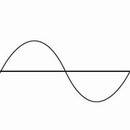
Frequency: The number of waves passing a given point in one second. Measured in Hertz (Hz), or cycles per second.
Hertz: The unit of measurement used to describe the frequency of a wave. One Hertz (Hz) is equal to one cycle of the wave per second.
Microwave (MW) - An electromagnetic wave with a wavelength between about one millimeter and 30 centimeters corresponding to a frequency between 300 GHz and 1 GHz.
Microwaves: A subset of radio waves that have frequencies ranging from around 300 million waves per second (300 MHz) to three billion waves per second (3 GHz).
Radio Frequency (RF) - frequencies of electromagnetic waves between approximately 3 kHz (3,000 Hz) and 300 GHz (3 x 10¹¹ Hz). Sometimes, a distinction is drawn between radio waves, which have frequencies between 3 kHz and 1 GHz, and microwaves, which have a frequency between 1 GHz and 300 GHz.
Radio Waves: Electromagnetic energy with frequencies in the 3000 hertz (3 kHz) to 300 billion Hertz (300 GHz) portion of the electromagnetic spectrum.
Radio frequency Energy: Another name for radio waves.
RF Energy: An abbreviation for Radio Frequency Energy.
Smart Meter: Smart Meters, (also called AMI, or AMR) are part of the "Smart Grid", which is part of a wireless system installed on our homes, businesses, and in most communities around the world. The smart meter system is typically installed without consent and without full disclosure of how they work. Some areas are banning the installtion of smart meters over various concerns including EMF polution and health related concerns.
Telecommunications: The transmission of words, sounds, or images, usually over great distances, in the form of electromagnetic energy, for example by telegraph, telephone, radio, or television.
Wireless Telephone: A hand-held phone with a built-in antenna that transmits signals through the air without a physical connection. Cell (cellular), PCS, mobile, car, and bag (transportable) phones are all considered wireless telephones. Cordless telephones used only in or around one’s home are not considered wireless telephones.
RESOURCES:
The EMF Safety Network
The EMF Safety Network is a sponsored project of the Ecological Options Network (EON). The EMF Safety Network continues to pursue justice on smart meters and EMF pollution.
Listen to what EMF Noise Sounds Like
Hear the sounds of EMF noise.