Top of page
Also:
Wiring Your Home for Smoke Detectors
Adding New Smoke Detectors to Your Existing System
Kids and Electricity
Electrical Safety
Smoke Detectors, Heat Alarms and CO Alarms
Summary: Studies show that smoke alarms save more lives than any other fire prevention measure. Smoke alarms provide the earliest warning of both fire and smoke.
Smoke Alarms Overview:
Smoke Detectors and Alarms
Help Save Lives and Reduce Structural Destruction!
Studies show that smoke alarms save more lives than any other fire prevention measure. Smoke alarms provide the earliest warning of both fire and smoke.
Smoke Alarms
In a typical home fire, occupants have just minutes to escape. And because smoke in one area may not reach a smoke alarm in another, the National Fire Protection Association (NFPA) recommends placement of at least one smoke alarm on every level of the home (including basements) and/or in every bedroom or sleeping area. The NFPA also recommends interconnection of alarms to provide better whole-home protection than stand-alone alarms. Photoelectric smoke alarms respond to slow burning, visible smoke caused by smoldering fires. Well suited for use in kitchens and near baths, they are less susceptible to nuisance alarms caused by cooking or high humidity.
Carbon Monoxide (CO) Alarms
CO Alarms are recommended near bedrooms and sleeping areas where they can wake sleeping residents. Additional CO alarms are recommended 5-20 feet from sources of CO such as a furnace, water heater or fireplace. Alarms can alert you to a problem only after smoke or CO reach their sensors. Choose locations free of obstructions, where the alarm will stay clean and protected from adverse environmental conditions.
Combination Smoke/CO Alarms
A combination Smoke/CO Alarm makes it easy to provide both types of protection throughout the home. A combination alarm installed on every level of the home is an excellent way to ensure maximum protection for occupants, with a minimum of installation effort.Heat Alarms
In some areas of the house, it is important to use a heat alarm that senses fire by air temperature, rather than a smoke alarm that senses particles in the air. The installation of heat alarms in attics (finished or unfinished), furnace rooms or garages is recommended, since these locations occasionally experience conditions that can result in improper operation of smoke alarms. Most UL approved heat alarms are designed to alarm when presented with a certain temperature at the alarm. They will not react to smoke and should not be used to replace smoke alarms, but as a supplement to a complete smoke alarm system.
GB Electrical Wiring Simplified Electrical Reference Book
Technical Details
Great for DIYers and Professionals Based on National Electric Code Easy to understand manual General how-to instructionProduct Description
Electrical Wiring Simplified Handbook, 40th Edition, Electrical Wiring Practices Manual, Easy To Understand, New & Improved Illustrations, Based On National Electric Code, Covers The Basics of Codes & Safety Practices, Wire & Cable Types, Branch Circuits & Grounding, Installation Of Service Equipment & Wiring & Troubleshooting & Repairs
GB Electrical Wiring Simplified Electrical Reference Book #ERB-WS
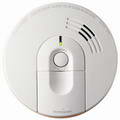
First Alert® 10 Year Lithium Smoke Alarm (SA305CN3)
- Ionization smoke sensor
- Includes 9 volt Lithium battery
- Use in kitchens and bedrooms
- Single test/silence button
- Flashing visual silence indicator
- Side battery drawer for easy replacement
- Missing battery guard to ensure battery is placed in smoke detector
- Tamper resistant (locking pins)
- Loud 85 db alarm
- Meets code in Oregon
- 10 year warranty
[Click image to enlarge]
A typical construction project will require a smoke detector in each bedroom and on the ceiling or wall at a point centrally located in the area giving access to bedrooms such as hallways. Mount smoke detectors at least 4" from wall or on the wall with the top of the detector within 4" and 12" of the highest point of the ceiling. In multi-story units there shall be a detector at each level and shall be placed at the center of the ceiling 24" or more higher than the hall are required to have a smoke detector on the hall ceiling and in the bedroom. In new construction when more than one smoke detector is required to be installed within an individual dwelling, the detectors shall be interconnected in such a manner that the actuation of one alarm will activate all of the alarms in the dwelling.
Lets take a look at some photos of recent projects that I have selected to help you see how its done.
Take a look at a typical Smoke detector installation
[Click on the images to Enlarge]