

Electrical Troubleshooting Lights that Flicker or Dim
|
How to Identify the Cause of Flickering or Dim Lights:Our lights have been getting dim and flickering, sometimes worse than the others, why is this happening? The Most Common Causes of Flickering Lights and Dim Lights. © By: Dave Rongey |
Flickering Lights and Dim Light Problems
Electrical Question: Our lights have been getting dim and flickering, sometimes worse than the others, why is this happening?
- We unplugged all the major appliances and the lights still dimmed and flickered.
- The power company came and checked outside the house and said they didn’t see anything that would cause this, and he even look at our panel box on the inside of the house and he still didn’t find a problem. He tighten up a couple of loose things in the panel and cut away a couple of branches on the outside and that was about it.
- The lights still flickered and dimmed. Next we called an electrician to checked the panel on the inside and he seemed to be tightening something on the inside. They even replaced sockets on the inside of our house. They basically couldn’t find a problem either outside after replacing some sockets. They told us to call them back if we had any more problems.
- For the rest of that evening and into the beginning of the next day the lights did not dim nor flicker. But later on in the evening of the next day the lights started back dimming and flickering. So in the next couple of days I called the power company back because I noticed branches close by our electrical lines and I asked them to see if that could possibly be the cause of the dimming and flickering of our lights. After they checked he notice the limbs but he said it would not be enough to cause dimming and flickering of our lights.
- After that a person who usually troubleshoots for electrical problems in homes checked our panel box out and he only tighten up a few things too but did not find any problems that would cause the lights to dim and flicker. I’m not sure about what to do next. No one can find the problem. Should I call the electrician back?
Also last week we had our air conditioner fixed but even with that off the lights still dim and flicker.
What do you think the problem might be? Any suggestions will be appreciated.
This electrical wiring question came from: Lakeisha, from Cleveland, Mississippi.
Dave’s Reply:
Thanks for your electrical wiring question Lakeisha.
How to Troubleshoot the Cause of Flickering or Dim Lights
Application: Troubleshooting the Cause of Dim or Flickering Lights.
Skill Level: Advanced – This is best performed by a Licensed Electrical Contractor. This problem may also require the Local Electric Utility Company or electric service provider.
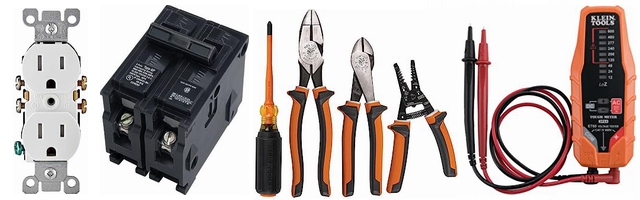
Tools Required: Basic Electricians Pouch Hand Tools, a Voltage Tester or Multimeter.
Estimated Time: Depends on personal level experience, ability to work with tools and troubleshoot and inspect electrical circuits and electrical system components.
Precaution: Depending on the symptoms, identify the main panel or panel circuit in question, turn it OFF and Tag it with a Note before working with the wiring.
Notice: Burnt or damaged electrical wiring and circuit components should be replaced with new electrical materials of the same voltage and amperage rating.
The Most Common Causes of Flickering Lights and Dim Lights
Electrical Troubleshooting for Flickering Lights and Dim Light Problems
The following are examples of common causes of dim or flickering lights that will be identified as you consider the following questions about the condition and occurrences.
Do the lights flicker all the time, or just during certain times of the day?
- If the home is located near a large city then you may be experiencing voltage levels that are dropping due to electrical loads on the utility grid.
- An electric power recording meter may be installed on the main power line for a few days to record the levels of voltage and determine if adjustments are needed within the local utility grid.
- Typically the local electric utility company will provide this service.
Do the lights dim when specific equipment is started, such as an air conditioner or the furnace?
- This will help to Lighting Circuits and Other Electrical Devices, because this is typically an indication that a dedicated circuit may be required for the larger equipment or that the main home electrical panel may need to be upgraded.
Does it seem that all of the home power is affected or just one circuit, or one part of the home?
- This will help to know if all of the Home Electric Power is Affected, because if all of the home power is affected then all of the above should be considered,however if the problem is mainly flickering lights then there is most likely a problem with the main electrical panel or the service from the utility company to the house panel, and special attention should focus on the utility cable service entrance splice, terminal connections at the main lugs, and the electric meter socket.
- If the electric utility service checks out OK then all the main service cables of the main house panel should be carefully checked. Note that most electric utility companies ate responsible for the service wiring to the primary connection to the home or to the primary side of the electric meter socket, find out the specifics from your local electric utility company.
Isolating a Problem Electrical Circuit
- If the flickering and dimming seems to affect only one circuit then the circuit needs to be identified and all of the devices of that circuit, including light switches and the light fixtures.
- These identified devices will all need to be checked starting with inspecting the junction box wiring of the ceiling light fixtures.
- Ceiling light fixtures with standard incandescent light bulbs create heat which can cause the wire spices inside the ceiling light fixture junction box to become brittle and deteriorate and cause intermittent circuit performance to the point of circuit failure, and in some cases this can even cause a fire.
Repairing Damaged Electrical System Components
- Due to the various complexities that may involve this electrical problem, the damaged electrical components and electrical wiring will need to be properly repaired to avoid further electrical failures and damage. A Qualified electrician should be consulted who will make electrical system evaluations and then make the appropriate repairs as needed.
More about Home Electric Circuits and Electrical Troubleshooting

House Wiring Circuits and Circuit Breakers
This article looks at common 120 volt and 240 volt house wiring circuits and the circuit breakers that are installed identifying the types and amperage sizes used in most homes.
Electrical Panel Circuit Listing
Testers to Help You Troubleshoot Electrical Problems
Troubleshooting Electrical Wiring
Licensed Electrician Explains the Methods of Successful Electrical Troubleshooting used to solve the majority of the home electrical problems and wiring failures encountered.
The following may also be helpful for you:
|
|
Be Careful and Be Safe - Never Work on Energized Circuits!
Consult your Local Building Department about Permits and Inspections for all Electric Wiring Projects.


More articles about Cause of Dim Lights, Electrical Troubleshooting, Lighting and Home Electrical Wiring: |
|
| « Previous | Next » |
Fix Light Switch Wiring |
My Motion Detector Light Stopped Working |