

 |
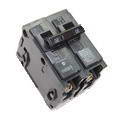
AFCI Circuit Breaker SensitivityDavid, from Anchorage, Alaska asks: I have a Siemens AFCI breaker that has recently begun tripping. It started slowly, tripping occasionally. Now, it won't even reset. The first time it tripped, I reset it and checked it successfully by pushing the button. It held for several days and tripped again spontaneously. Also oddly, we had one night where our ceiling fan light turned on spontaneously in the middle of the night. It's a different circuit and I don't know if it's related, but I thought I'd mention it. Nothing else has been changed or added. The house is 6 years old. I'm curious if it could be the breaker going bad, or something else. Any ideas on what or how to check this out? Thanks! Don, From what you have described it sounds like the AFCI circuit breaker may be sharing the neutral wire of the AFCI circuit with another circuit, which is also known as a multi wire circuit. This practice is fine with non-AFCI circuits, but AFCI circuit breakers do not function well with multi wire circuits. The other possibility is that there is another problem with the wiring of either of these circuits. On way to test this would be to identify the area that the circuit serves and begin disconnecting certain devices or wire paths then see if the problem goes away. When AFCI circuit breakers were new there were a few problems, however these original problems have been resolved but the nature of the arc fault protection might causing the AFCI circuit breaker to be indicating that there really is a problem that may need to be identified and corrected. |
GFCI Ground Fault
and AFCI Arc Fault Circuit Breakers

|
By Dave Rongey
Summary: Electric circuit protection with GFCI provide the extra measure of safety for your family. GFCI's are installed serving required house wiring circuits protecting areas where electrical appliances or products may come into contact with water, such as the kitchen, bathroom, laundry, hot tub areas and more. © By: Dave Rongey |
GFCI's are an Effective Means of Preventing Severe Electrical Shock
Circuit breakers serving your house wiring circuits are intended for switching and protection of your home's wiring from high temperatures caused by excess current higher than the rating of the wire.
While thermal-magnetic circuit breakers are the key element for overload and short-circuit protection of your electrical system, there are potentially dangerous conditions that do not involve over current.
The following circuit breakers should be utilized to provide further protection.
Residential Electrical Circuit Breakers
Ground Fault Circuit Interrupters (GFCI)

|
GFCI's are an effective means of preventing severe electrical shock. GFCI's are installed serving required house wiring circuits to protect areas of the home where electrical appliances or products may come into contact with water, such as the kitchen, bathroom or laundry. They are designed to protect against severe electrical shock or electrocution from ground faults. Ground faults occur when the electrical current in an appliance strays outside its normal path, and the human body becomes part of the path through which the electrical current may flow. |
|