

Identifying The Cause Of a Dimming Light Circuit
|
What is causing my light fixtures to be dim? How to Identify and Fix the Cause of Dim Lights, which may be a Indication of an Electrical Problem. How to Check Electric Circuit Wiring causing Dim Lights. © By: Dave Rongey |
Dimming Lights and Electrical Problems
Electrical Question: What is causing my lights to be dim?
- There is one circuit in my home that dims than regains power several times in a row. It’s not a flicker and at times everything seems normal, plus it doesn’t matter if one rooms’ electricity is being used or several.
- I have replaced the circuit breaker for that line, but still the problem exist.
- There has not been any reconstruction on this 55 year old house for over ten years and any new upgrades utilize their own separate circuit.
- I have considered there may be a bad rheostat (dimmer) switch in the line, but I’m not sure how to make an accurate meter check.
- Aside from the frustration, I am concerned that there may be a short or bad wiring that could cause a fire.
Please reply ASAP.
Thank you
Background: Greg, from Massapequa, New York.
Electrical Question #2: I would like to know why everything gets dim in my house when the microwave is turned on, or the dryer is started.
- I have replaced the main breaker as per power company recommendation, and they replaced and repaired all on their end.
- I also noticed the ground post was hot and steaming in the rain, why?
- What can be causing these issues?
This electrical wiring question came from Ken in Irwin, Pennsylvania.
Dave’s Reply:
Thanks for your electrical questions Ken and Greg.
Dimming Lights may be a Indication of an Electrical Problem
Application: Troubleshooting and Repairing Circuit Problems.
Skill Level: Intermediate to Advanced – Best performed by a Certified Electrician or a Licensed Electrician.
Tools Required: Basic Electricians Pouch Hand Tools, Voltage Tester or Volt Ohm Meter or plug-in circuit analyzer.
Estimated Time: Depends on the age of the home and the condition of the electrical wiring and access to the circuit wiring to be inspected, evaluated and repaired.
Precaution: Identify the outlet circuit at the electric panel, turn it OFF and then Tag it with a Note before performing any wiring inspections or electrical repairs. If an outlet or the electrical wiring is found to be damaged then repairs and replacement parts should be obtained with the same voltage and amperage rating. Working in an electric panel is dangerous due to arc flash hazards and the possibility of electric shock.
Notice: Burnt or damaged electrical wiring and circuit components should be replaced with new electrical materials of the same voltage and amperage rating.
How to Identify and Fix the Cause of Dim Lights
- Dimming lights may in fact be a sign of a bad electrical connection or a malfunctioning electrical device.
- You mention that this happens with one circuit only, so that will be our focus. The possibility of a bad dimmer switch can be easily tested by simply replacing the dimmer switch with another dimmer or a standard light switch just to see if the problem still exists.
- If a dimmer switch is not the problem then electrical junction boxes will need to be opened so that the wiring splices may be inspected. This is done by starting with electrical junction or device boxes that are up-stream or close to the incoming power source.
- This is a process of elimination which will eventually reveal the problem. Typically a bad splice is found which is identified by discolored or burnt insulation on the wiring and or the splice connection itself.
- Upon discovery the affected wiring must be repaired in such a way to ensure that the new splice and affected wiring are re-spliced properly to prevent a repeat occurrence.
- Understand that the problem with this circuit may be with the hot or the neutral, in fact often it is a neutral connection that is faulty.
- How to Check Circuit Wiring at the Panel
- At the electrical panel identify the affected circuit neutral wire and follow it to the position on the neutral terminal block.
- Check that the screw is firmly holding the neutral wire in place. Often a loose neutral wire can produce a similar problem.
- If this is the case, the neutral wire may be discolored due to a loose connection.
- How to Check Circuit Wiring at the Panel
Yes, this could be a fire hazard so I would encourage you to have this taken care of asap.
More about Electrical Wiring, Troubleshooting and Repairs

Electrical Circuit Wiring
This article looks at common 120 volt and 240 volt house wiring circuits and the circuit breakers that are installed identifying the types and amperage sizes used in most homes.
Electrical Panel Circuit Listing
Home Electric Circuit Breakers
Home Electrical Circuit Breakers
A guide to home electrical circuit breakers and how they work to protect your electrical wiring. When properly installed, your home electrical wiring is protected by a circuit protection device.
Using Testers to Identify Electrical Problems
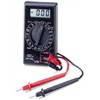
Testers to Help Solve Electrical Problems
How to Troubleshoot Electrical Wiring Problems
Types of Electrical Testers
Understanding Digital Volt Meters
When working on home electrical wiring using voltage meter can play an important part in electrical safety. Electrical testers and voltage meters enable you to identify electrical circuits and help prevent the possibility of accidental electrical shock.
The following may also be helpful for you:
|
|
Be Careful and Be Safe - Never Work on Energized Circuits!
Consult your Local Building Department about Permits and Inspections for all Electric Wiring Projects.


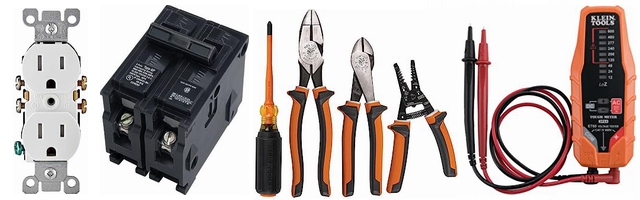
More articles about Cause of Dim Lights, Electrical Repair, Electrical Troubleshooting, Lighting and Home Electrical Wiring: |
|
| « Previous | Next » |
Timer Control for Outdoor Christmas Lights |
Kitchen Exhaust Fan Wiring |