

Installing a Electric Water Heater Circuit
|
How to Wire an Electric Water Heater Circuit: We are installing the wiring for an electric water heater circuit and we need to make sure we are using the right wire size. © By: Dave Rongey |
Wiring a Water Heater
Electrical Question: We are installing the wiring for an electric water heater circuit and we need to make sure we are using the right wire size.
- We are installing a new electric water heater, in a home addition.
- We have a sub panel, installed by the electrician who started the project, with the breaker ready to go.
- All we need to do to complete the job is to run the wire, and put in the shut-off switch near the water heater.
- It seems that we will need 10 AWG wire, is this correct?
My questions about my Water Heater Project are:
- Do we just run regular 10awg wire in the ceiling, and then as we drop down the wall in the unfinished basement, we put it into PVC or metal conduit?
- I understand that the water heater needs a shutoff on the circuit near the heater. My big question is, how do we terminate this wiring in prep for the water heater? We will probably have a plumber install the heater (because they are heavy!), although all the plumbing is ready to go, so it will be quick.
- I am not clear on what we need to leave the plumber in order for him to hook up the heater when he arrives. Do we just wire to the switch, and then the heater comes with wire to the other side of the switch? Or do we need to provide wire to the heater too?
This will be inspected, and we are working under a permit.
Thank you!
This electrical wiring question came from: Cheri, a Homeowner from Wichita, Kansas.
Dave’s Reply:
Thanks for your electrical wiring question Cheri.
How to Wire a Water Heater Circuit

Application: Wiring a 240Volt Electric Water Heater.
Skill Level: Intermediate to Advanced – Best installed by a Licensed Electrical Contractor. Work in electrical panels is not recommended for homeowners, non-experienced individuals or non-electricians.
Tools Required: Basic Electricians Pouch Hand Tools, electric drill, auger bits and extension cord as needed depending on the scope of the project.
Estimated Time: Depends on personal level experience, ability to work with tools and install 240 volt electrical circuit wiring.
Precaution: Identify the main circuit of the panel, turn it OFF and Tag it with a Note before working with the wiring or installing the 240 volt wiring and circuit breaker.
Notice: Installing an additional 240 volt circuit should be done according to local and national electrical codes with a permit and be inspected.
Electric Water Heater Circuit
The following is an example of installing an electrical circuit for a 240 volt electric water heater in a home:
- A typical electric water heater requires a 30 amp 240 volt circuit
This circuit is generally provided by installing a 10/2 NM with ground cable to the location of the water heater. If the location of the water heater requires a disconnect then a 240 volt 30 amp rated switch or disconnect should be installed at the water heater location. - Protecting the Circuit Wiring
If the circuit wiring will transition to surface wiring then the cable can either have the outside sheath removed where it may be sleeved into a protective PVC or EMT conduit where the wire is protected from damage and the conduit is attached to the surface as required. - Installing the Junction Box and Securing the Conduit
The circuit wiring is then typically attached to the water heater junction box using a supported flexible conduit and approved fittings as required. - Wiring Connections a the Water Heater
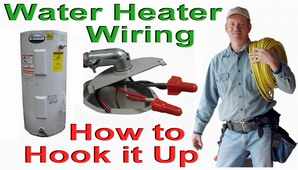
The water heater will come with an electrical junction box which is typically located on the top of the unit. The junction box is recessed into the top enclosure of the water heater where one screw secures the cover plate where the main wires are located. The circuit wires are attached to the wires of the water heater using approved wire connectors. The circuit ground wire is attached to the green ground screw and terminal which is located in the water heater junction box. - Specific Information for Your Water Heater
Be sure to consult the Installation Manual or Owners Manual which is provided with your water heater for specific information. Consult your local building department for specific codes which apply to your area and project application.
See More about Home Electrical Wiring
- Basic House Wiring Circuits

-
House Wiring Circuits and Circuit Breakers
- This article looks at common 120 volt and 240 volt house wiring circuits and the circuit breakers that are installed identifying the types and amperage sizes used in most homes.
- Electrical Panel Circuit Listing
- Circuit Wiring

-
Electrical Circuit Wiring
- This article looks at common 120 volt and 240 volt house wiring circuits and the circuit breakers that are installed identifying the types and amperage sizes used in most homes.
- Electrical Circuit Breakers
-
Home Electrical Circuit Breakers
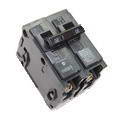
- A guide to home electrical circuit breakers and how they work to protect your electrical wiring. When properly installed, your home electrical wiring is protected by a circuit protection device.

- Home Electrical Codes
- Electrical Code Directory covering electrical wiring methods for water heater circuits.
The following may also be helpful for you:
|
|
Be Careful and Be Safe - Never Work on Energized Circuits!
Consult your Local Building Department about Permits and Inspections for all Electric Wiring Projects.


More articles about Electrical Wiring, Water Heater Circuit and Home Electrical Wiring: |
|
| « Previous | Next » |
Add a Touch Sensor to a Light Fixture |
Electrical Wiring for a Garage and Recreation Room |