

Ohms Law Formula
 |
By Dave Rongey
Summary: Ohms Law Formula and how it is used for determining electrical loads as it pertains to Watts, Volts and Amps. Ohms Law is very helpful to help us understand sizing electrical circuits for the home electrical system. © By: Dave Rongey |
Basic Ohms Law Formula for Electrical Wiring Calculations
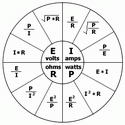
The Ohm's Law Calculations for Electrical
Using the Ohm's Law is a way to determine information needed to understand how to design electrical circuits.
This formula works with three main variables and depending on what is known can produce a missing factor which is needed to determine the circuit size.
The Ohm's Law is also used when designing appliances and building electrical equipment and devices.
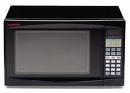 |
Example: A Microwave Oven circuit |
| Device ________________ Volts _________________ Amps ________________ Quantity ______________ Circuit Size Amps ______ Wire Size ____________ See the Wire Size Chart |
Understanding Electrical Equipment and Appliance Labels |
 |
 |
Electrical Calculations and Formulas |
|
 |
Converting Watts to Kilowatt/hoursQuestion: Can you tell me how to convert watts to kilowatt/hours? Dave's Answer: Kilowatts represents 1000 watts, so 6000 watts is the same as 6 kw. Based on this, if 6000 watts of power were consumed for one hour then that would be 6000 watts per hour. A watt hour meter measures how many watts of power are consumed per hour. Electrical utility bills often include the peak demand period, which is the highest amount of electricity that is consumed in one hour. If this high demand of electricity is during the peak demand period of the day then this may have an effect on the electrical utility bill causing it to be more expensive. If a high amount of electricity is consumed during non-peak demand periods during the day then the electrical billing may not be as costly. |