

Electrical Safety and Voltage Testers
 |
Summary: When working on home electrical wiring, quality voltage testers can play an important part in electrical safety. Electrical testers enable you to identify electrical circuits and help prevent the possibility of accidental electrical shock. © By: Dave Rongey |
Voltage Testers for Testing Electrical Wiring Circuits
Electrical Safety begins a the understanding of the fundamentals of electrical wiring and the project that is to be performed. De-energize or turn off a circuit that is causing a hazard and any circuit that will be worked on.
There are many electrical testers available to choose from with a variety of options. The following are some important points to take into consideration when selecting an electrical tester.
Before using any electrical tester, make sure to fully read and understand the instructions and documentation that comes with the tester you select.
 |
Receptacle Tester and Circuit Analyzer The handy plug in receptacle voltage testers are great for checking for voltage and also shows if the receptacle is wired correctly or is missing a wire, such as the ground wire.This Receptacle Tester and Circuit Analyzer tests ground fault receptacles to ensure proper installation of your house electrical wiring. |
With a variety of voltage testers available, make sure that you select one that is of good quality, easy to read and has long insulated test leads.
When using any style voltage tester be very careful.
If you come in contact with one of the leads while you are grounded or if any part of your body is placed into the circuit you could get shocked!
 |
Voltage Testers This is a K-60 induction style voltage tester which works by inducing a current through the tester which produces the reading. Advantages: The K-60 does not require a battery. Most of the battery-powered voltage/continuity testers will not measure voltage without a battery. We see this as a significant disadvantage to these type testers. The K-60 is always ready for use—no batteries required. This style tester is slim, has long leads and is a great fit in the tool pouch. I've used this style for years and is great for testing house electrical wiring circuits. |
 |
Tic Testers Test your circuits before doing any electrical work and save yourself from any danger. This Tic Tester is a non-contact voltage tester which tests for the presence of live AC Voltage from 50-600 Volts. Visual (flashing) and audible (beeping) indicators signal the presence of voltage by simply pressing the built-in pocket clip. /td> |
|
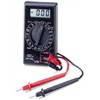
7 Function Digital Multi-TesterDigital voltage testers are much safer and provide an easy to read display, as shown below. Many of these testers can be used to test AC and DC Voltages and Continuity. A typical digital meter/multi-tester lets you get accurate readings for DC voltage, DC current, AC voltage, resistance, transistor tester, diode tester, and battery tester. Learn more about how testers work |
|
Electrical Safety is Extremely Important for All Projects Skill Level: All Electrical Projects are Best Performed by a Licensed Electrical Contractor or a Certified Electrician. Tools Required: For Best Result a Basic Electricians Pouch of Hand Tools, a Voltage Tester and a Multi Meter are essential. Personal Safety: Home projects and electrical construction of all types and sizes require taking all safety precautions for personal protection with regard to environmental hazards including hazardous materials and tool safety. Read and understand all materials and instructions that are related to the project, including materials, tools and other components before proceeding. Estimated Time: Electrical projects should not be rushed or performed under pressure that may elevate the possibility of mistakes. The the required depends on the specific project, persons level of experience, ability to work with tools and electrical circuit wiring, and the available access to the project area. Precaution: Always Positively Identify the electrical circuit, turn it OFF and Tag it with a Note before working with the wiring. Working in an electric panel is dangerous due to arc flash hazards and the possibility of electric shock. Important: Modifying existing electrical circuits or installing additional electrical wiring should be done according to local and national electrical codes with a permit and be inspected. |
Safety Checklist |
Click Here to learn How To Use Electrical Testers