Do-it-Yourself Electrical Wiring Articles | Electrical Wiring Diagrams | Electrical Questions and Answers

Understanding Generator Ratings

<< How to Calculate Generator Sizing Why Generator kVA So Very Important >>
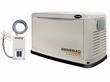
home-generator

Summary: This handy guide will help you understand generator ratings as it applies to your home generator project.

Discover which Generator Ratings is right for Your Application

There are a wide variety of portable generators that available for purchase.


Some are more suitable than others for connecting to your house. Generally many of the lower priced generators are not suitable for connecting to your home.

These engine generators do not have sufficient engine durability to power your house during an extended power outage and many have poor power quality output that can damage expensive electronics such as home office equipment, and furnace controls .

For best results you may wish to consider a generator that has a four-wire 120/240-Volt outlet with a maximum rating of up to 50 amps and a standard L1420 or L1430 locking or L1450P straight receptacle. These receptacles are most commonly found on portable generators.

When selecting a generator to connect to your house, ensure the generator you select:

  • will not damage sensitive electronic appliances
  • provides the capability to start a well pump or other large motor loads
  • has the necessary four wire 30-amp or 50-amp receptacle as required depending on the essential loads for your home.

As a guide, look for the following characteristics when selecting a generator to power your home:

  • overhead valves, not side-mounted valves
  • continuous rating between 4400 and 7200 watts
  • a peak rating sufficient to start the largest motor you will be running
  • an automatic voltage regulator with voltage regulation of 5% or less
  • low oil shut down
  • 120/240-volt output
  • strongly consider engine generators that have the capability of using natural gas or propane if these fuel options are available at your house

Fuel Options
Natural Gas or Propane

Portable generators have several fuel options including, gasoline, natural gas, or propane. Each of these fuel types has certain advantages and disadvantages.

Gasoline is tempting because it's readily available. There are, however, drawbacks associated with gasoline. If gasoline is stored for a period of time it can lose its energy potential. Gasoline also has a tendency to "gum up" the engine's carburetor system, and eventually causing problems. Finally, gasoline is a very hazardous material to store. It is a highly volatile liquid, and its vapors can be ignited easily by a spark, flame, or other hot object.

Natural gas is the fuel of choice whenever it is available. Natural gas is a clean burning fuel that requires no storage tank at the site. In addition, exhaust emissions are kept to a minimum, which is becoming increasingly important as new, stringent regulations continue to be passed. Due to the lower energy content of natural gas, your generator maximum capacity may be reduced by approximately 20%.

Propane is very similar to natural gas and it is a great alternative if natural gas is not available in your area. Propane is nontoxic so it burns clean and it's not harmful to soil or water. However, propane does have its drawbacks. You must store propane in an appropriate storage tank. Yet, when it comes to storing propane, it's much safer than other petroleum products because of its narrow range of flammability. Due to propane's lower energy content, your generator maximum capacity may be reduced by approximately 10%.


Cord Connectors
Generators have different connectors, depending on the type of generator, the type of power provided, and the size of the generator.

Many other connectors are only rated for only 120V or only low amperage 240V and are not appropriate for powering your home.

If you are planning to purchase a generator, make sure that it has a connector that matches one of the four shown.

A NOTE ABOUT JOB SITE GENERATORS:
Generators with Full Panel GFCI Protection (Ground Fault Circuit Interrupter) comply to OSHA inspections on job sites. These generators will not function when connected to the home or building main breaker box because of a neutral bonded to ground. When both the generator and the home or building breaker box contains a neutral bonded to ground, the generator's GFCI will open and no outlets will function.

30-Amps Rating
Generators with a four wire 120/240-volt outlet with a maximum rating of 30-amps are a standard size receptacle found on many portable generators in the 5 to 7 kW size range. If your generator has a four wire 120/240-volt outlet rated at 20-amps you will not be able to power as many appliances.

Connecting your generator to your home should always be done in an approved method including:
Transfer Switch.
Approved circuit breaker linkage lockout system.
If using an extension cord, be sure the wire gauge is correctly matched to your generator receptacle amperage rating with consideration to the length of the cord.

If you connect more loads than your generator receptacle is rated to carry continuously, e.g. 20-amps or 30-amps, the circuit breaker on your generator will trip. To restart your generator, you must decrease your connected loads by switching off breakers in the household breaker panel.

If you try and connect a higher rated receptacle such as a 50-amp receptacle found on many portable generators in the 10 to 12 kW size range, you will most likely trip a breaker within the generator unit. This breaker serves as a protection device to prevent permanent damage to the generator unit.

What loads you can operate.
If you connect more loads then your generator receptacle is rated to carry, e.g. 20 amps or 30 amps, the circuit breaker on your generator will trip. To restart your generator, you must decrease your connected loads by switching off breakers in the household circuit panel. If you try and connect a higher rated receptacle such as a 50 amp receptacle found on many portable generators in the 10 to 12kW size range, you will trip a breaker in the generator unit.

Appliance Usage Guide
When using any generator, you will need to know the power requirements of your home appliances. The following guide shows you the power needs of various household appliances, tools and equipment. For the exact power requirements, you should consult your product's data plate or manual.

generator loads chart

The wattages presented in this table are estimates.
The actual wattage required for your appliances can be calculated.
Remember that 1kW = 1000 watts, 2kW = 2000 watts, etc.

Running Watts = Volts X Amps

Rule of thumb: Allow 2kW/Horse Power for appliances with motors. Some motors can require up to 3 times the running wattage to start.

Always use starting wattage when calculating electrical load requirements for your generator. Select the appliances you want to operate and add the starting wattages together to determine if they can all be operated at the same time without exceeding the limits of your generator. Remember that circuit breakers usually control more than one appliance.

<<- How to Calculate Generator Sizing Why Generator kVA So Very Important->>
-
Understanding Generator Ratings Top of Page -
installing-a-ceiling-fan
NEC® and National Electrical Code® are registered trade marks of the National Fire Protection Association (NFPA).
CE® and Canadian Electrical Code® CSA C22.1 are registered trade marks of the Canadian Standards Association (CSA).
Part P® - Electrical Safety© is registered Crown Copyright of the UK Government Planning Department for Communities
©Copyright 2007 - 2010 Ask-The-Electrician