

The Importance of Electrical Circuit Polarity

|
How to Identify and Repair Reverse Polarity of an Electrical Circuit: Electrical Safety and Proper Circuit Polarity, Polarity has to do with the flow of electricity. Polarity and Outlets, Circuit Wires and Polarity. © By: Dave Rongey |
The Problems of Reverse Polarity and How to Fix It
Electrical Polarity Question#1: I need your help on something. I know what reverse polarity is – when a receptacle is wired with the hot and neutral wire feeds attached to the opposite screws that they should be attached to.
- I want to know why this is bad.
- My understanding is when a receptacle is wired this way it will send power to the lamp or radio, etc in the reverse direction that was intended.
- Why is this bad, and what negative effect does it have?
Thank you for your help in this,
Randy
This electrical question came from: Randy , a Homeowner from Alexandria , Virginia.
Electrical Polarity Question#2: I recently moved into an older model mobile home. I was outside and touched the metal strip right above the skirting and got shocked.
- The door that covers the hot water tank outside and the front storm door, it doesn’t always shock though.
- I was told I needed to install a ground rod so I did so and it still shocks. Also, when you touch the washer and dryer at the same time!
- I tested the electrical outlets and a lot of them tested reverse polarity, which we are in the process of fixing.
- The one in the bathroom tested hot on neutral with open hot, it is not a GFI, and we are replacing it with one.
- Would the outlets inside have anything to do with getting shocked inside and out?
Have any suggestions on what I should do?
This electrical wiring question came from Vicki, in Oolagah, Oklahoma.
Additional Comments: very good, helpful.
Dave’s Reply:
Thanks for your electrical question Randy and Vicki.
How to Identify and Repair Reverse Polarity of an Electrical Circuit
Electrical Safety and Proper Circuit Polarity
The Importance of Electrical Polarity
Randy, polarity has to do with the flow of electricity. As the name implies, polar has to do with direction, north pole, south pole, and this is related to magnetism which is the influencing force or flow or direction, which takes us right back to polarity.
Polarity and Electrical Devices
- Earlier Wiring Methods and Polarity
It used to be that polarity was not such a big concern, especially when using standard incandescent light bulbs with nothing more than a sealed vacuum enclosure with gas and a carbon wire filament which was not polarity sensitive, the light bulb would light if the power flowed in either direction, it just needed power to make the filament glow. With more modern electrical devices, we have a third wire for the ground and more and more devices have electrical circuits and components that are definitely polarity sensitive. - Polarity and Outlets
You may even notice that one of the straight blades of the 120 volt outlets is larger that the other, and the same is true for the plugs found on many cords of electrical appliances. This is because there is a specific polarity that is needed for the specific circuit components. - Circuit Wires and Polarity
The hot wire of a 120 volt circuit is an ungrounded conductor while the neutral wire is a grounded conductor, both being current carrying conductors which is why they are insulated. - The Circuit Ground Wire
The third wire being the ground wire may be uninsulated because it is a non-current carrying conductor which is used as an equipment safety which is attached to the frame or enclosure of the electrical device. This grounded conductor has a direct path of least resistance to the main ground source where it sends voltage in the case of a failure, which is designed to quickly cause the circuit protective device to trip and de-energize (turn off) the circuit and protect it from damage. - Electronic Equipment and Polarity
Some electronic devices may actually be damaged if they are plugged into an outlet that has reverse polarity. So to summarize this it is well to understand that with today’s electrical circuits it is best to make sure the polarity is correct.
More about Home Electrical Wiring
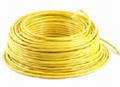
Electrical Wire for the Home
Complete listing of electrical wire types and parts used for home projects with electrical code information serves as selection guidelines.
For more information about Outlet Wiring
How to Install Electrical Outlets

Wiring Electrical Outlets
Fully Explained Photos and Wiring Diagrams for Wiring Electrical Outlets with Code Requirements for most new or remodel projects.
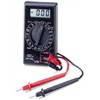
Understanding Electrical Testers
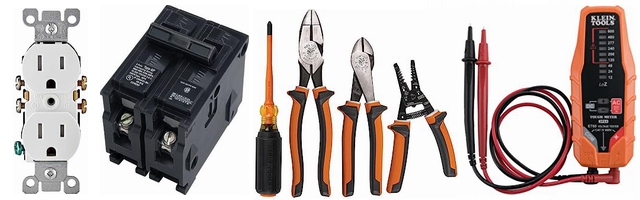
When working on home electrical wiring using voltage testers can play an important part in electrical safety. Electrical testers enable you to identify electrical circuits and help prevent the possibility of accidental electrical shock.
Types of Electrical Testers
Using Electrical Testers
The following may also be helpful for you:
|
|
Be Careful and Be Safe - Never Work on Energized Circuits!
Consult your Local Building Department about Permits and Inspections for all Electric Wiring Projects.


More articles about Electrical Repair, Outlet Circuit and Home Electrical Wiring: |
|
| « Previous | Next » |
Bathroom Exhaust Fan and Light Electrical Wiring |
Sizing an Electrical Circuit for a Motor Home |