Questions about Under cabinet Lights
Questions about Wiring Under Cabinet Lights
Please Note: The following is a true example of what happens even when you hire an electrician but the project is completed without contacting the local building department and not having an inspection.
Question:
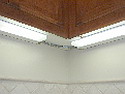
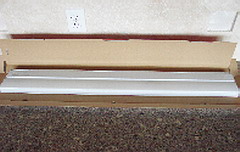
I had hired a electrician to run under cabinet lighting in my kitchen, however for another problem not relating to that, I had another electrical contractor through the house today and the holes are not patched from the installation and he stated some alarming potential hazards with the install that I wanted to clear up. Basically I was told that the manner the lights have been installed was not up to NEC code. I was told these several points:
1. You cannot (by NEC code) use lamp cord inside walls. 2. You cannot hard-wire any lighting to the small appliance circuits above the counter. Is this true? or was this job up to code? ( I assumed it was since I hired a licensed electrician.)
I have since then contacted the electrical guy who installed the lights and he writes : Please tell that contractor to verify the article :210.52B (1),(3) from the NEC code 2005. As for the 1st point, I don't know what that contractor was talking about when he said that there's HAZARD danger. The only possible problem is that if the cable (cord light) is fire-rated. I have asked a few electrical contractors about this situation and their opinions differ. Some said you can't use it and some said you can. I have searched in the books, but I have not found anything explaining what needs to be done.For your safety reasons,we could solve this problem by either using a junction box under the cabinet and make all the lights under the cabinet (pull new jumpers). The other option would be to change the under cabinet lighting, and pull hard wire between the lights. My goal is customer satisfaction,if you pick the second option, I will pay for the old lights. Please let me know what you're planning to do and once again I'm sorry for this situation.
I am now scared. I cannot locate or understand any part of the NEC book and Ii am scared that my home will catch on fire with the current installed job. Can you assist in any way? Is what he did up to code? or not? and if it is not how do Ii go about fixing it and what part of the NEC did he violate with his install? Thank you so much for taking your time to read this.
Answer:
Hi Anna - Great Question!
The best way for me to advise you would be to start with one question: Was this electrical project installed under the authority of the local building department or jurisdiction, who issued a permit for the work? If this is true then any possible faults or code violations will most likely be identified during the time of inspection by the building department representative. If this is not the case, then you may still contact your local building department and follow their recommended procedure, which will ensure that your electrical project has been performed safely, and will hold anyone responsible for any violations. This will also provide important documentation which may be needed for correcting any problems.
Note: Never install lamp wire or any other type of cord inside walls where it is concealed with the exception of low voltage applications where the wire gauge is sized properly for the application. Romex or SER type cables that are approved for home electrical applications are permitted.
NOTE: This question is based on a specific lighting project.
|