

Why Dryers Will Not Dry Clothes or Produce Heat
|
Why is my clothes dryer is turning but not heating and not drying the clothes? How to Find Out Why Dryers Will Not Dry Clothes or Produce Heat. © By: Dave Rongey |
Clothes Dryer Problems
Electrical Question: Why is my clothes dryer turning on but not heating and not drying the clothes?
- I have had a certified dryer tech check the dryer and all is well.
- I have had an electrician check the dryer plug which is getting 220 volts to the plug.
- The electrician checked the dryer while running and it is getting 220 volts to it while running.
- I also tried another known good dryer, but still no heat.
- I had the electrical box connections checked and there is a new breaker connected for the spot in the box for the dryer.
- What should we check next?
This electrical wiring question came from: Keith, a Homeowner in Illinois.
Dave’s Reply:
Thanks for your electrical wiring question Keith.
The Cause of Dryers that Do Not Heat or Dry Clothes
Common Dryer Problems that Prevent a Dryer From Heating and How to Fix Them
- Blocked or Clogged Air Ducts
- If you are absolutely sure that the dryer is getting the required 220/240 volts then the next item to check would be the air duct to make sure it is not blocked or obstructed.
- Air Flow Switches and Safety Switches
- All dryers have built in sensors that will prevent the unit from heating or over-heating if there is not enough adequate air flow.
- Inspect the Dryer Vent and Vent Cover
- The average dryer vent system should be inspected or cleaned at least once a year due to the amount of lint that can collect and get trapped.
- The cover over the end of the dryer vent typically located on the outside wall of the home should be inspected and cleaned to remove any build up of lint.
- Lint Buildup Problems and Potential Fire Hazards
- A collection or build up of lint can cause be a potential fire hazard, but even a partially blocked dryer vent system can prevent the dryer from working efficiently which can definitely cost more to operate, causing higher energy or electricity bills.
More about Electric Clothes Dryers
- Wiring a Dryer
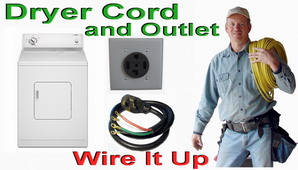
- See an electric dryer installation with a typical 220 Volt electric power cord wiring system.
- You may find yourself with either a 3-wire or 4-wire electric dryer, or a 3-wire or 4-wire outlet.
- Lets look a how the electric dryer is wired and what to do if your cord does not match the plug.
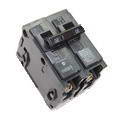
- Electrical Wiring and Circuit Protection using Circuit Breakers
- A guide to home electrical circuit breakers and how they work to protect your electrical wiring. When properly installed, your home electrical wiring is protected by a circuit protection device.
The following may also be helpful for you:
|
|
Be Careful and Be Safe - Never Work on Energized Circuits!
Consult your Local Building Department about Permits and Inspections for all Electric Wiring Projects.


More articles about Dryer, Electrical Wiring and Home Electrical Wiring: |
|
| « Previous | Next » |
Increasing Electrical Circuit Size |
Adding Sub-Panels to Main Panels |