|
|
More about Wiring a Range |
|


 |
 |
 |
 |

|
|||||||
 |
 |
 |
 |
 |
 |
 |
 |
 |
|||
 |
|||||||||||

|
By Dave Rongey
Summary: Electric Range Installation with a typical 240 Volt electric power cord wiring system for 3-wire and 4-wire configurations. © By: Dave Rongey |
How to Wire a Kitchen Range Power Cord
3-Wire Configuration
An electric range can be wired to work with either a 3-wire or 4-wire circuit. All new installations require the 4-wire circuit which has a separate insulated neutral wire and the separate ground wire along with the 2-hot wires.
4-Wire Configuration
In this case where the home is older than the new electric range here's what you would have to do: You need to purchase a 3-Wire Range Cord. Remove the 4-Wire Range Cord and install the replacement 3-Wire Range Cord.
|
Next where the wires are connected to the electric range you will need to re-install the Bonding Jumper which goes between the Grounded Screw and the Neutral Terminal as shown in the 3-WIRE HOOK UP wiring diagram below. The Grounded Screw is attached to the metal frame of the electric range and is usually located under the neutral wire terminal location. |
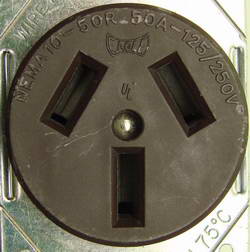
Electrical Wiring for a Four Terminal Range Cord Connection |
 |
 |
 |
 |
| NEMA 10-50R 50AMP-125/250VOLT | NEMA 14-50 50AMP-125/250VOLT |
|
|
|
More about Wiring a Range |
|
Installing Residential Electrical WiringElectrical Project Skill Level:Intermediate to Advanced - Best performed by a Licensed Electrical Contractor. Electrical Tools Required: Basic Electricians Pouch Hand Tools and a Voltage Tester. Estimated Time: Depends on personal level experience, ability to work with tools, install electrical circuit wiring, and the available access to the project area. Electrical Safety: Identify the panel circuits found in the project area, turn them OFF and Tag them with a Note before working with the electrical wiring. Electrical Wiring Parts and Materials: Electrical parts and materials for home wiring projects should be approved for the specific project and compliant with local and national electrical codes. Electrical Codes and Inspections: Installing additional home electrical wiring should be done according to local and national electrical codes with a permit and be inspected. |
|
Learn Electrical Wiring Instructional Electrical Wiring Videos 

|
|
|
|
» Wire It RIGHT!« Wire it with Confidence! Fully Illustrated Instant Download 
Now You Can Wire it like a Pro! |

 |
|
 |

